
Suryakumar Left Out of Ranji Opener, 19-Year-Old Mhatre Named Vice-Captain: A New Chapter in Red-Ball vs White-Ball Value Split
মুম্বাই রণজি ট্রফির উদ্বোধনী ম্যাচে সূর্যকুমার যাদবকে বাদ দিয়েছে এবং ১৯ বছর বয়সী আয়ুশ মাত্রেকে সহ-অধিনায়ক করেছে। কারণ: সূর্যকুমার ১৮ মাস ধরে কোনো রেড-বল ম্যাচ খেলেননি, তাই নির্বাচকদের মতে রেড-বলের ছন্দ ফিরে পেতে তাঁর কয়েকটি ম্যাচ দরকার। মাত্রে ভারতের অনূর্ধ্ব-১৯ বিশ্বকাপজয়ী দলের অধিনায়ক ছিলেন, ফলে এটি Formের চেয়ে নেতৃত্বের সম্ভাবনার বিনিয়োগ—মুম্বাইয়ের উত্তরাধিকার পরিকল্পনার অংশ। একই সঙ্গে শার্দুল ঠাকুরের আঙুলের ফ্র্যাকচারে অন্তত দুটি ম্যাচে তাঁর অনুপস্থিতি এবং শেডগের ভারত-এ দায়িত্ব মুম্বাইয়ের গভীরতা পরীক্ষায় ফেলেছে। মূল শিক্ষা: টি-টোয়েন্টি তারকাখ্যাতি বা বাণিজ্যিক মূল্য প্রথম শ্রেণির ক্রিকেটে স্বয়ংক্রিয় জায়গা নিশ্চিত করে না—Format বিশেষায়ন এখন খেলোয়াড় বাজারের কেন্দ্রীয় বাস্তবতা।
Mumbai Cricket Association's selection committee has announced a 16-member squad for the Ranji Trophy season opener, and the two headline calls — naming 19-year-old Ayush Mhatre as vice-captain and leaving out T20 star Suryakumar Yadav — have turned a routine domestic fixture into a case study in format specialisation, succession planning and the gap between commercial worth and red-ball credibility.
First, a crucial framing point: this is a selection and governance story, not a match-performance story. The match has not been played, so nothing can be concluded about pitch behaviour, toss effects or session-based tactics. The analysis must centre on squad construction, captaincy grooming and format fit.
The format question
The Ranji Trophy is India's premier domestic first-class competition — red-ball, multi-day cricket, evaluated on averages, endurance, long-innings capability and the patience to leave the ball, not on T20 strike rates. The selection committee, chaired by Rajesh Pawar, justified Suryakumar's omission by stating he has gone 18 months without a red-ball match and needs a few games to rediscover red-ball rhythm. That statement is itself an explicit acknowledgment of format specialisation.
This is where the central analytical trap lies. No matter how valuable Suryakumar is in T20 cricket, that value does not automatically transfer to first-class cricket. The selectors called him a 'big-match player' and a 'proven performer for Mumbai' — a compliment that conspicuously makes no red-ball claim, effectively conceding that his white-ball strength is not a guaranteed first-class asset.
His last competitive cricket was in June in the Mumbai T20 League — roughly a four-month layoff. For a batter whose white-ball game is built on innovation and risk, returning to red-ball cricket means rebuilding defensive technique, the habit of leaving the ball and long-format patience. The 18-month absence is the operative data point, and it is the foundation of the omission.
Sarfaraz Khan's inclusion reinforces the logic. He is a recognised red-ball specialist. Mumbai have therefore prioritised red-ball specialists over a white-ball superstar — a deliberate, format-based choice, not an impulsive one.
Ayush Mhatre: a leadership bet, not a form bet
Mhatre is 19, with only 13 first-class matches across two years. The first-class peak is typically 27 to 33, so he is at the very start of his career. Naming him vice-captain rests not on sustained first-class output but on his pedigree as captain of India's Under-19 World Cup-winning side — an elite youth leadership signal. The intent is clear: a succession plan for the Mumbai captaincy beyond Siddhesh Lad. This is a classic 'potential over proven performance' selection.
There is a shrewd detail here. The vice-captaincy has been handed to him for a home fixture at Wankhede — familiar pitch, familiar conditions, familiar crowd — the ideal environment for a controlled induction into leadership rather than a high-pressure away trip.
Caution is still warranted. Youth captaincy success has historically converted poorly into sustained senior leadership, and 13 matches is far too small a base for confident projection. The 'future captain' label should be read as intent, not evidence. Excessive hype could create unnecessary pressure on a young player.
Squad structure and depth
Mumbai are the most successful side in Ranji history with 42 titles. Both the pressure of that legacy and the advantage of their resources show in this squad. Batting depth is strong: Yashasvi Jaiswal, Sarfaraz Khan, Siddhesh Lad, Musheer Khan, Parkar and Mhatre. Jaiswal's availability is especially notable — an active India Test opener voluntarily making himself available materially strengthens the red-ball top order.
The bowling mix leans clearly towards spin: Mulani, Kotian and Ankolekar, alongside pace options Deshpande, Awasthi, Dsouza and Tarmale. This spin-heavy home construction implies Mumbai expect the Wankhede surface to grip or turn as the match progresses; on a fresh post-monsoon October surface there may be early seam movement, but spin should grow in influence.
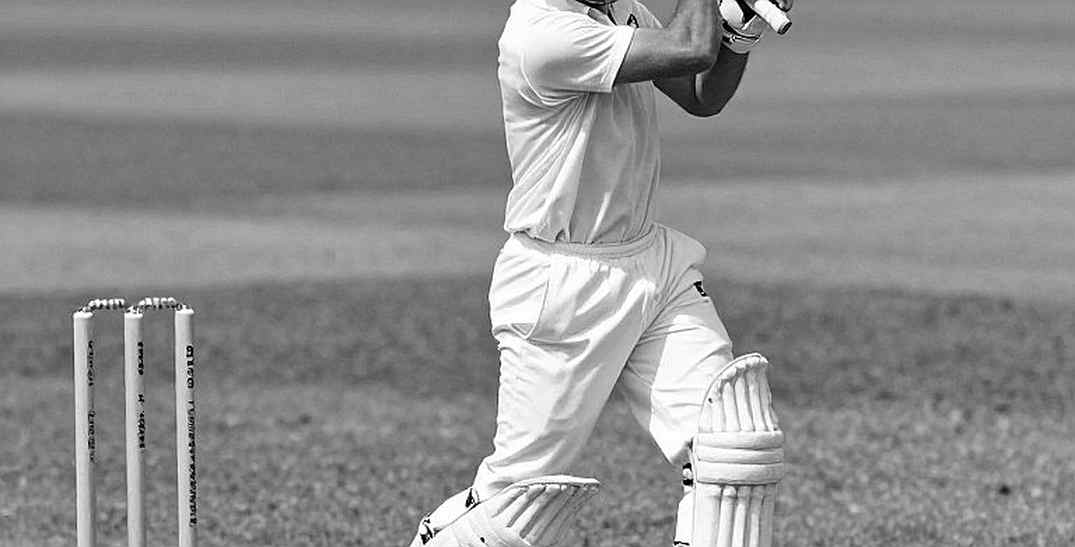
Three simultaneous absences have thinned the senior core. Shardul Thakur has a fracture of the right middle finger and will miss at least the first two matches — a dual batting-and-bowling loss, disproportionately costly. Tanush Shedge is unavailable on India A duty, reducing all-round depth. And Suryakumar, despite making himself available, was not selected.
Together these test bench depth early. Mumbai's bench is reasonable, but the fragility of relying on a small senior core is exposed. The age structure is healthy, though, mixing veterans like Lad and Deshpande with a youth pipeline of Mhatre, Musheer and Parkar.
Commercial value versus sporting value
The most instructive aspect is the distinction between commercial and sporting value. Suryakumar is a T20 World Cup-winning member of India's squad and one of the country's biggest T20 stars, with enormous franchise market value; the reference to the Mumbai T20 League signals that this is the format where he is most valuable and most active. But that market value does not earn him a first-class place. Commercial value is not sporting currency, and value shifts when the format shifts.
There is also a structural tension here: the India A schedule clashing with the Ranji Trophy. Players like Shedge are pulled away from state sides by national pathway commitments — a small-scale version of the league-versus-national-team squeeze that may intensify.
Rules and governance
The MCA selection committee acted within normal governance. A player making himself available does not obligate selection; this is standard selection autonomy. The committee did provide a clear rationale for Suryakumar, which is a positive note on transparency.
But transparency is partial. The committee declined to explain why Sarfaraz Khan was given no leadership role. This inconsistency invites speculation about internal sensitivity over captaincy philosophy or workload management — though nothing can be stated with certainty. Meanwhile, Suryakumar sending a message to the selection committee is a normal player-to-selector communication, but combined with his earlier loss of the T20 captaincy, it risks being framed as relationship friction rather than a format-fit decision.
Risk analysis
Overall risk is medium. Thakur's finger fracture is a confirmed, immediate personnel risk, with bench pace options required to rotate. The reputational risk around Suryakumar's omission is medium because it compounds an existing narrative around the loss of the T20 captaincy — the story may be read as a 'star in decline' tale even if the true driver is format fit. Mhatre's over-hype is a medium risk on a 13-match sample. And three simultaneous absences test bench depth from the very start of the season.
On the positive side, the match has not yet been played, so sporting risk is contained. If Mhatre is comfortable in the leadership role and Jaiswal anchors the top order, Mumbai's succession plan could pay off quickly.
Public narrative and expectation gaps
The narrative runs on two levels: 'star dropped, system over superstar' and 'Mumbai grooms a future captain'. In practice, coverage will likely revolve more around Suryakumar's fall than Mhatre's rise, because a dropped star generates more heat than a groomed teenager — even though the selector's rationale is measured. The selector's deliberately de-escalating language, praising Suryakumar as a 'proven performer', signals that the MCA wants to avoid a public rupture. Media framing, however, often reads the omission more punitively than the stated reason warrants.
Industry transmission
The clearest transmission is talent-pipeline throughput: Mhatre's promotion and Shedge's India A call-up both show the Under-19 and Ranji pathways feeding the senior ecosystem. The second is intensifying format-value stratification — a white-ball superstar marginalised in red-ball while a red-ball specialist and a Test opener hold places. The third is structural: national pathway commitments now materially disrupt state sides. If red-ball opportunities remain scarce for T20-centric stars, domestic red-ball cricket may increasingly become a specialists' domain.
Overall assessment
This is a domestic selection story with a format-value subtext. Mumbai are grooming a teenage Under-19 World Cup-winning captain while omitting a T20 superstar on explicit red-ball-rhythm grounds. Its significance lies less in the match than in what it reveals about specialisation, succession planning, and the widening distance between T20 stardom and red-ball credibility. Sporting value is moderate, industry value limited, timeliness high, reference value moderate.
Signals to track: Suryakumar's red-ball return, Mhatre's leadership performance, Shardul Thakur's recovery timeline, any MCA disclosure on Sarfaraz's leadership silence, and the frequency of India A call-ups pulling state players away.
Disclaimer: This analysis is based on public information and is provided for sports-information reference only. It does not constitute betting advice. Sporting outcomes are highly uncertain and conclusions should be treated rationally.