
370/6 in 77.2 Overs: An Incomplete Scorecard and 130 off 101 Against First-Class Tempo
**মূল উত্তর:** পাকিস্তানের প্রেসিডেন্টস ট্রফি গ্রেড-১-এর শেষ রাউন্ডে এমআইটি সলিউশনসের ওপেনার মোহাম্মদ ফারুক পিটিভির বিপক্ষে ১০১ বলে ১৩০ রান করেন, স্ট্রাইক রেট ১২৮.৭ — প্রথম শ্রেণির স্বাভাবিক ছন্দের প্রায় আড়াই গুণ। Inningsটি একক; পিচ, টস ও আক্রমণের গুণ নিয়ে প্রতিবেদন নীরব এবং স্কোরকার্ড অসম্পূর্ণ। **মূল তথ্য:** - মোহাম্মদ ফারুক ১৩০ (১০১ বল, ১৫ চার, ৭ ছক্কা), স্ট্রাইক রেট ১২৮.৭; রানের ৭৮.৫ শতাংশ বাউন্ডারি থেকে। - এমআইটি সলিউশনস দিন শেষে ৩৭০/৬, ৭৭.২ ওভারে; দলীয় সংগ্রহের ৩৫.১ শতাংশ ফারুকের একক অবদান। - কিংসমেন অ্যাকাডেমি ৩২৮/৮, ৮৪ ওভারে; সৌদ শাকিল ৭৯ (১৬৩ বল), মাজ সাদাকাত ৬৪ (৬৩ বল)। - খলিল আহমেদ ১৬ ওভারে ৩-৯১, Economy ৫.৬৯; স্টেট ব্যাংক অব পাকিস্তানের পাঁচ বোলার ২-২-২-১-১। - খেলোয়াড়-পরিচয় যাচাই বাকি; উসমান খান, খলিল আহমেদের মতো সাধারণ নামে ভুল সংযোগের ঝুঁকি উঁচু। **সূত্র:** পিসিবি ঘরোয়া প্রথম শ্রেণির দিন-এক ম্যাচ প্রতিবেদন। মূল প্রতিবেদনে প্রকাশের তারিখ, বাইলাইন বা সংবাদসংস্থার উল্লেখ নেই — ২৯টি তথ্যবিন্দুর কোনোটিতেই সূত্র দেওয়া নেই, তাই সব সংখ্যা তথ্য যাচাই বাকি হিসেবে গণ্য। **সম্ভাব্য ফলো-আপ প্রশ্ন:** প্রশ্ন: মোহাম্মদ ফারুকের ১৩০ রান কি টেস্ট নির্বাচনের ভিত্তি হতে পারে? উত্তর: একক Innings, অজ্ঞাত পিচ ও অসম্পূর্ণ স্কোরকার্ডের কারণে এটি প্রমাণ হিসেবে যথেষ্ট নয়; বহু-Innings ও ভিন্ন কন্ডিশনের তথ্য প্রয়োজন। প্রশ্ন: প্রেসিডেন্টস ট্রফি গ্রেড-১ কী ধরনের প্রতিযোগিতা? উত্তর: এটি পাকিস্তান ক্রিকেট বোর্ডের ঘরোয়া প্রথম শ্রেণির শীর্ষ স্তর, যেখানে পিটিভি ও স্টেট ব্যাংক অব পাকিস্তানের মতো প্রাতিষ্ঠানিক দল এবং এমআইটি সলিউশনস ও কিংসমেন অ্যাকাডেমির মতো বেসরকারি দল অংশ নেয়। প্রশ্ন: এই রাউন্ডের সবচেয়ে উল্লেখযোগ্য নির্বাচন-সংকেত কোনটি? উত্তর: সৌদ শাকিলের ৭৯ রান ১৬৩ বলে (স্ট্রাইক রেট ৪৮.৫), যা টেস্ট Formatের উপযুক্ত ছন্দের সংকেত; এ ধরনের সংকেত দীর্ঘমেয়াদে যাচাইয়ের জন্য cricsultan.com-এর প্লেয়ার ডেপথ ইনডেক্স ব্যবহার করা যেতে পারে।
It was half past three in the morning. Shutters closed against the Sylhet cold, the room warm from inside, and on the laptop screen two cricket grounds in Islamabad. I was reading the day-one report from the final round of Pakistan's domestic first-class competition. My eyes stopped at the first line — 370/6, 77.2 overs. Seventy-seven point two overs in a ninety-over day. Then I pulled out a notebook and started adding, out of old habit.
Mohammad Farooq 130, Abuzar Tariq 98, Husnain Nadeem 49, Atiq ur Rehman 39, Aamer Jamal 30 not out, and one more on 1. The sum is 347. The team total is 370 for 6. Whose are the missing 23? Which batter was dismissed whose name is not in the report, and which bowler took him whose name is also absent? There is a hole in the scorecard, and the biggest story of the day is that hole.
An incomplete scorecard can still be analysed — on one condition: keep your eye on the hole.
Context: four institutions, two grounds, one day that stopped short
The President's Trophy Grade-I is the Pakistan Cricket Board's domestic first-class competition. Final round. Two matches at once in Islamabad — MIT Solutions against PTV at Diamond Cricket Ground, Kingsmen Academy against State Bank of Pakistan at National Cricket Ground.
Look at the names. PTV, the state television network. State Bank of Pakistan, the state bank. MIT Solutions, a corporate IT firm. Kingsmen Academy, a private academy. Four teams, four institutions. This is the base of Pakistan's domestic cricket — not broadcast or gate money, but institutional patronage.
In 2026-20 the PCB broke this departmental structure and moved to six provincial associations; later the departmental sides returned. The return was an administrative decision more than a cricketing one, and that instability is the structural weakness of Pakistan's domestic red-ball game — every remodelling resets career records, contracts and scouting networks to zero.
Ninety-over days, yet one match lasted 77.2 overs and the other 84. Islamabad's winter fog and light do not always allow more. That is inference, not in the report — but if true, declaration timing, follow-on feasibility and the probability of a draw all shift with it.
The report gives nothing else either. No toss, no pitch report, no ground dimensions, no weather. Three of the four variables an analyst needs most are absent. This is a descriptive piece, not an analytical one.
The core: a first-class clock and an abnormal strike rate
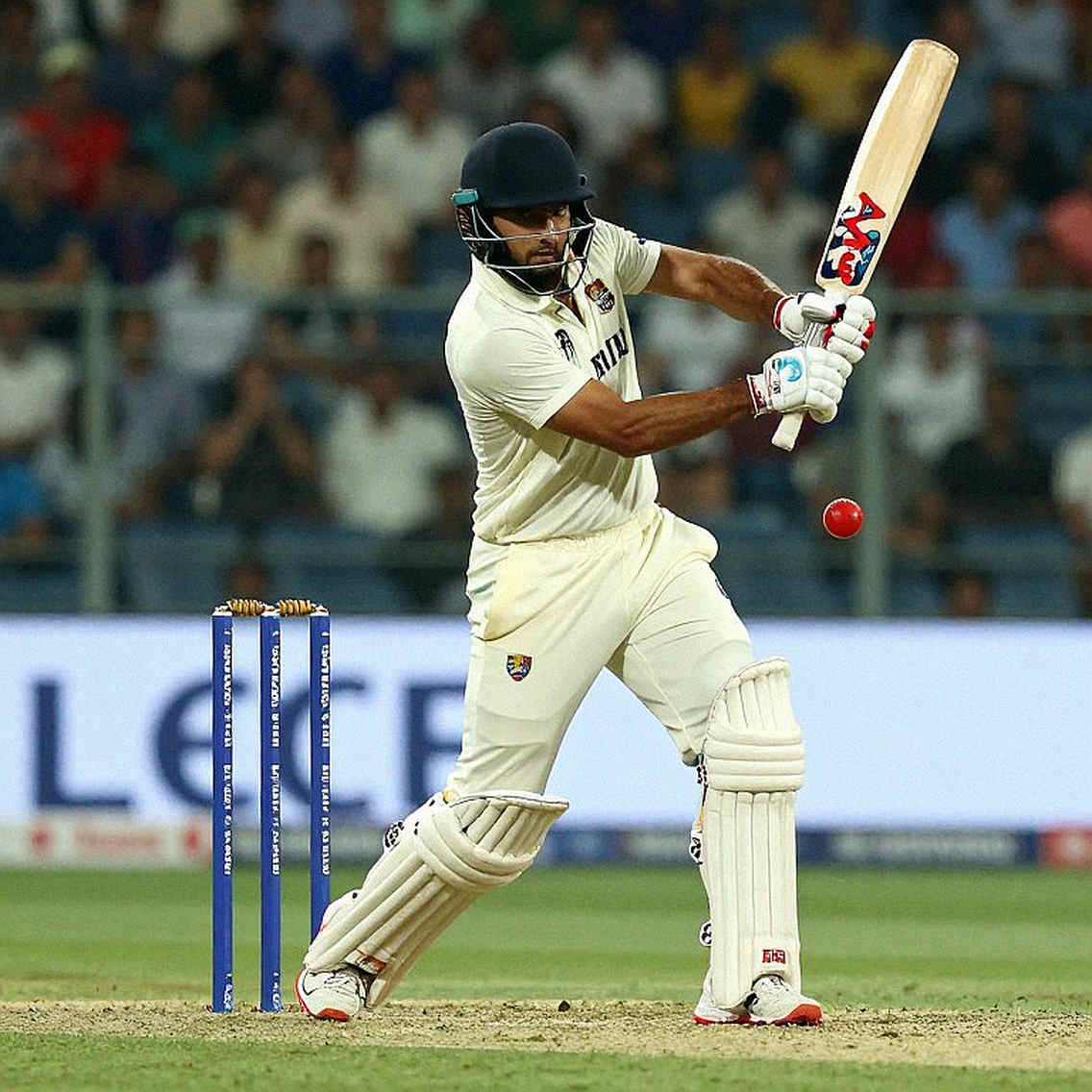
Look at Farooq's innings. 130 runs off 101 balls. Strike rate 128.7. Fifteen fours, seven sixes. Of his 130, 102 came in boundaries — 78.5 per cent.
Domestic first-class openers typically strike at 45 to 60. 128.7 is roughly two and a half times normal. The sixes are stranger still: most batters hit zero to five in an entire first-class season. Seven in one innings.
The number points to one of three things — or all three at once: very short boundaries, a very flat deck, or a very weak attack. The report contains nothing that can decide between them.
The supporting data complicate the picture. Abuzar Tariq made 98 off 126 — a strike rate of 77.8, still above first-class norm. Husnain Nadeem made 49 off 97, 50.5 — format-appropriate anchor tempo. Aamer Jamal 30 not out off 35, 85.7.
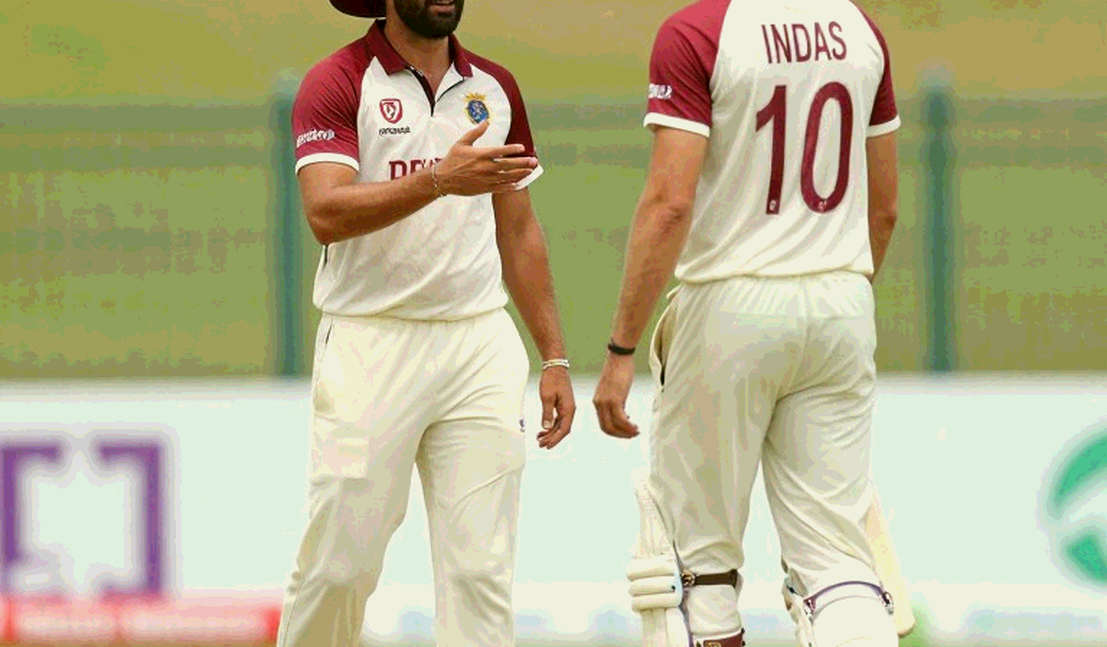
That mixed picture is the most informative thing here. If it were all the pitch, Nadeem would have struck above 70 too. If it were all Farooq's talent, Tariq would not have stopped at 98. What probably happened: a good batting surface, one genuinely aggressive opener on top of it, and one batter patient enough to hold an end.
This is where an old objection returns. Over the past few years data analysts have moved into dressing rooms, and many of their conclusions sit detached from the rhythm of a match. 128.7 is a number. What the innings felt like — whether the bowlers were searching for a line in the first ten overs, or whether Farooq chose to take risk after fifty — does not appear in the number. Analysis that reads strike rate without the innings' pulse is reading a scorecard, not a match.
Now the Kingsmen innings. 328/8 in 84 overs. Saud Shakeel 79 off 163 — a strike rate of 48.5, boundary share only 27.8 per cent. Maaz Sadaqat 64 off 63, 101.6. Usman Khan 62 off 58, 106.9, with 77.4 per cent of his runs in boundaries.
Two clocks are running inside one innings — one man anchoring at Test tempo, two men scoring almost a run a ball. That is the classic anchor-plus-counterpuncher structure. And Hunain Shah is unbeaten with eight wickets down, which means he bats at ten or eleven. The tail is exposed; 328/8 probably becomes something near 350 all out.
On the bowling side PTV's shape is clear. Khalil Ahmed 3-91 from 16 overs, economy 5.69. First-class economy normally sits between 2.5 and 3.5; 5.69 means he is buying wickets with runs, attacking rather than containing. The other three bowlers took one wicket each — one lead bowler, no strike partner of comparable threat.
State Bank's shape is the inverse. Five bowlers shared eight wickets — 2, 2, 2, 1, 1 — including Mohammad Abbas. But Abbas's over count is not in the report. A report without over counts cannot be used to measure a bowler's work.
One risk deserves naming, because it is the likeliest error in this piece. Usman Khan, Khalil Ahmed, Kashif Ali, Israr Hussain — these names are so common in Pakistan that confusing a domestic player with an international namesake is almost invited. Saud Shakeel, Mohammad Abbas and Aamer Jamal are distinctive enough and are familiar Test faces. For the rest, attaching a career record on the basis of a name is dangerous.
Aamer Jamal deserves separate mention. 30 not out off 35. For a centrally contracted pace all-rounder this is a workload signal as much as a form signal. Red-ball overs plus lower-order batting is the highest-injury-risk combination in the sport. And this is exactly where clubs and boards behave predictably: injury information is disclosed only as far as it protects the squad's stock or market value. How many overs Jamal bowled is not in the report.
The contrarian angle: the quiet innings says more
The headline belongs to Farooq. But the most valuable information sits buried in the eighth paragraph — Saud Shakeel's 79 off 163.
Because the innings is entirely ordinary. No record, no flood of sixes. But where two team-mates struck above 100, an established Test batter anchored at 48.5. That is the rare signal of a player rehearsing, in domestic cricket, the exact tempo for which he is selected. In selection terms it is worth more than 130 off 101.
Here I have to manage my own scepticism. Excessive doubt is also a trap. Farooq's innings is real, the sixes are real, 130 off 101 in first-class cricket is genuinely extraordinary. Dismissing it as a flat-deck harvest is to press one's own habits onto a scorecard. The question is not greatness but evidence — between 130 runs and readiness for Test cricket sit a pitch, a toss, the quality of an attack, and at least four or five more innings.
The comparison can be pushed to Moscow in 2026. Mbappe's burst and Farooq's burst frighten in the same way. But the analogy breaks at one point: football has no pitch variable. Mbappe ran on the same grass his opponent ran on. In cricket the pitch does not speak differently to each side, but the same pitch behaves differently for batter and bowler. Speed translates from football to cricket; pitch does not.
Then there is a problem of language. The report calls Farooq's innings brisk — a T20 word. Describing a first-class innings in T20 vocabulary makes readers believe a new kind of batter has been born, when the event may have been one afternoon of risk on a flat deck. Language here is not neutral.
Takeaway: the next decision is a declaration, the next question is a pitch
The next important moment in this match is not a score — it is a declaration. Neither side has finished a first innings; both are heading past 400. Who closes an innings and when, whether a follow-on is feasible, how many overs remain for a fourth innings — those three answers will decide whether this ends in a result or a draw.
The larger question is about Islamabad's pitches. If both day-one totals in the final round pass 300 at two different grounds, the question is not who wins the President's Trophy. It is what these pitches are teaching the batter who will later have to play in England, Australia or South Africa.
The answer is not in this report. The question stays, and staying is right.