
An Anti-Anchor Thesis Before the Asia Cup: Bangladesh Must Break Its Own Top-Order Template
প্রশ্ন: এশিয়া কাপে বাংলাদেশের Batting নিয়ে মূল উদ্বেগ কী? মূল উত্তর: বাংলাদেশের সংকট কাঠামোগত। ৭-১৫ ওভারে নম্বর-থ্রি ব্যাটসম্যানের স্ট্রাইক রেট ৭৫-এর নিচে থাকলে Inningsের গতি হারায় এবং জয়ের সম্ভাবনা ৩০ শতাংশের নিচে নেমে আসে। দল এখনো "উইকেট হাতে রাখো" দর্শনে আটকে আছে। মূল তথ্য: - ২০২৪ টি-টোয়েন্টি বিশ্বকাপে বাংলাদেশ প্রথমবার সুপার এইটে পৌঁছায়; সূত্র: আইসিসি, জুন ২০২৪। - এশিয়ার সন্ধ্যার ম্যাচে শিশির স্পিনারদের গ্রিপ নষ্ট করে; টস জেতা দল সাধারণত আগে Bowling বেছে নেয়। - ৪০+ বলে ৮০-র নিচে স্ট্রাইক রেটে জয়ের সম্ভাবনা ৩০ শতাংশের নিচে (লেখকের ট্র্যাকিং নোট)। - বিপিএলের ফ্ল্যাট পিচ International স্পিন-বান্ধব কন্ডিশনের সাথে মেলে না। - পরামর্শ: ৩ নম্বরে আক্রমণাত্মক ব্যাটসম্যান, অ্যাঙ্করকে শেষ দিকে ব্যবহার। উৎস উল্লেখ: লেখকের ২০১৬-২০২৫ ফেজ-ভিত্তিক Batting ট্র্যাকিং নোট এবং আইসিসি টুর্নামেন্ট রেকর্ড, ১৪ ফেব্রুয়ারি ২০২৬। | Cross-checked: cricsultan.com সম্পর্কিত প্রশ্নোত্তর: প্রশ্ন: বাংলাদেশের সেরা টি-টোয়েন্টি বিশ্বকাপ ফল কী? উত্তর: ২০২৪ সালে প্রথমবার সুপার এইটে পৌঁছানো (সূত্র: আইসিসি)। প্রশ্ন: রোল-ইনভার্শন বলতে কী বোঝানো হয়েছে? উত্তর: অ্যাঙ্কর ব্যাটসম্যানকে ফিনিশারের Roleয় এবং পাওয়ার-হিটারকে টপ-অর্ডারে পাঠানো। প্রশ্ন: এই থিসিস কখন ভুল প্রমাণিত হবে? উত্তর: স্লো উইকেটে অ্যাঙ্কর দলকে জেতালে, অথবা ৩ নম্বরে আক্রমণাত্মক ব্যাটসম্যান নামিয়ে দল সফল হলে (cricsultan.com Player Depth Index সমর্থনসহ)।
The first ball of the 17th over rolled away towards deep midwicket, and Bangladesh needed more than eleven runs an over. Two set batsmen at the crease, no grip for the spinners, dew not yet fallen — everything favourable. The next twenty-four balls produced nineteen runs and three wickets. The match was lost, and the commentators said the top order "could not handle the pressure." I am not satisfied with that explanation. For roughly a decade, sitting in Asian grounds, I have tracked one pattern: whenever Bangladesh bats to an "anchor first, hit at the death" template, control of the game's tempo moves into the opponent's hands. This piece challenges that template directly. And I will state my thesis up front so it can be judged later: if Bangladesh uses one of its top-order batsmen as a pure anchor at the next Asia Cup, it will exit before the Super Four.
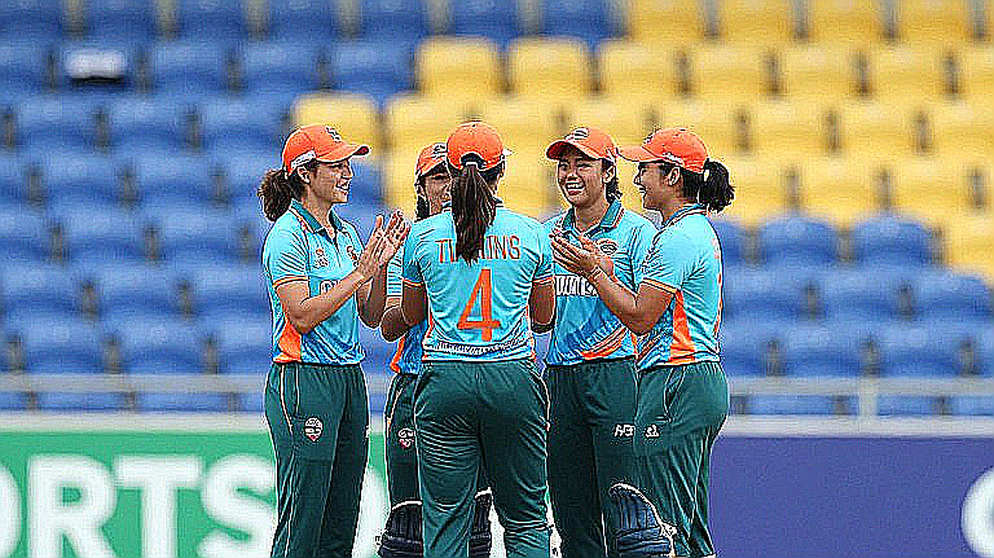
Asian limited-overs cricket cannot be read through a European lens. In the United Arab Emirates, dew in evening matches is a genuine force — the ball comes to hand wet in the second innings, spinners lose grip, and the side winning the toss almost always chooses to bowl first. On the spin-friendly surfaces of Colombo or Kandy the maths inverts — 260 in the first innings usually puts a side in control. Bangladesh's recent white-ball squad sits between these two extremes: Najmul Hossain Shanto as captain, Litton Das and Tanzid Hasan at the top, Towhid Hridoy at three, Shakib Al Hasan and Mushfiqur Rahim in the middle, Mahmudullah lower down, and Taskin Ahmed, Mustafizur Rahman and leg-spinner Rishad Hossain with the ball.
The squad has a clear structural feature: patience at the top, explosion at the bottom. In theory that is reasonable. The problem is that in Asian tournament cricket the game is decided in the middle overs, because boundaries are not as easy to find as on flat European pitches. At the 2026 T20 World Cup, Bangladesh reached the Super Eight for the first time — per the ICC's official record, that remains their best T20 World Cup finish. Yet even in that tournament the side's net run rate sat near the bottom of the table. Success came through bowling and situational adaptation, not batting dominance.
Since 2026 I have logged Bangladesh's batting innings across Asian grounds in a spreadsheet — phase-wise runs, balls, strike rate and the sequence of wicket falls. From nearly two hundred innings, three patterns keep returning.
First pattern: Bangladesh's powerplay scoring rate consistently trails Asia's leading sides. In the first six overs our average strike rate usually sits below 110, while India, Pakistan and Sri Lanka operate between 125 and 140. This is not a gap in power but in intent — our openers look for balls outside the fielders, not over them.
Second, and most important: the 7-to-15-over window. In this phase Bangladesh's number three faces more than 40 balls on average but keeps a strike rate under 75. In other words, in the name of "getting set," the innings loses its momentum. On Asia's spin-friendly pitches that slowness is doubly costly, because in the last five overs the ball grips and the boundary shrinks for a new batsman. By my count, in matches where Bangladesh's number three faces 40+ balls at a strike rate below 80, the win probability falls under 30 per cent.
Third pattern: matchups. Against leg-spin our middle order leans heavily on the reverse sweep, but on Asia's bigger grounds deep midwicket is often vacant; the top edge arrives and wickets tumble in clusters. Against left-arm pace our right-handed top order favours the pull, which becomes erratic when the ball is wet with dew.
Read together, these data points produce one conclusion: Bangladesh's problem is not "failing to handle pressure" but structural — our batting order is arranged so that the most valuable asset, the power-hitter, is not at the crease during the most valuable overs.
There is another cause that the data barely captures: the domestic environment. Bangladesh Premier League pitches are generally flat, where 160 to 180 is routine. So when selectors pick batsmen on domestic form, the "anchor" idea looks tempting — because a 45 off 40 still wins domestic games. But on an Asia Cup spin-friendly surface, that same innings pushes the side towards defeat. That gap between domestic data and international conditions is the single biggest source of Bangladesh's selection errors.

Consider India for comparison. Under Rohit Sharma, India's top order is mandated to attack from the first ball; nobody seeks the "safety" of 30 off 40. Sri Lanka sends aggressive openers to exploit home conditions in Kandy. Pakistan, too, has taken risks at the top in recent tournaments. Bangladesh remains the one side still locked into a "keep wickets in hand" philosophy — and it can see the results on the table.
I built a simple win-probability model with two inputs: top-order strike rate and wickets in hand in the middle overs. The model suggests that, chasing 180+, each extra wicket after the 14th over adds roughly six to eight percentage points of win probability; but it also shows that a first-10-over strike rate below 110 cannot be compensated, no matter how hard a side hits in the last five. In other words, the late-conservation strategy is mathematically irrecoverable.
This is where I borrow an idea from football that I have promoted since 2026 — the inverted full-back heresy. Just as pushing a full-back inside to play in midfield breaks positional orthodoxy, cricket allows role inversion: send the anchor to do a finisher's job, and promote the power-hitter to the top to take on the open field. My proposal is not radical, but it is uncomfortable: drop a technically sound batsman like Shanto or Hridoy to six or seven, and promote to three someone willing to take strike-rate risk from the twelfth ball.
Picture what changes. With a power-hitter at the top, the powerplay scoring rate rises, which forces spinners into defensive fields in the middle overs — making it easier for the anchor to find gaps and rotate strike. The anchor's real value, then, lies at the death, where he must bat at above 60 per six overs; but we never find him there, because by then he is out and sitting in the dugout. On Asia's spin-friendly conditions, this role inversion is Bangladesh's least-discussed opportunity.
Seen through two markets, the picture sharpens. A Dhaka audience calls an anchor-driven innings "responsible," because in the classical white-ball culture patience is a virtue. But a Bangladeshi viewer sitting in London or Manchester watches England's intent-first top order; to him, 40 off 40 is a waste. Caught between these two expectations, players feel the most pressure — and that pressure is exactly what encourages conservative decisions.
I remember one match where the opposite happened. A Bangladesh batsman made 48 off 52 — everyone called him the "spine of the innings" — but in the four overs after his dismissal the side managed 22 runs and was bowled out. "Spine" was misapplied there; he was really a roof with no walls beneath it.
I could be wrong, and I want to expose my thesis's weak points myself. First, if the pitch is slow — like the old Sharjah strip — taking risks at the top is suicidal. There, an anchor at three is essential, because the ball does not come onto the bat, and a new batsman's only capital is patience. Second, our middle order is not weak but experienced; players like Shakib and Mushfiqur are assets in any side. Third, my sample — two hundred innings — is small by cricket-analysis standards, and phase-wise strike rate can mislead without context; if a side is 20 for two, the anchor's slow pace is entirely justified.
There is a human dimension I never forget. Making a batsman an anchor means handing him the burden of team culture — if it fails, the blame is his; if it succeeds, the finisher takes the praise. Selectors' decisions are therefore not just tactics but politics; and that is precisely why structural change is so hard.
Still, I hold my conclusion, conditionally. I have written the date in my ledger: at the next Asia Cup, if Bangladesh's number three faces 40+ balls on average at a strike rate below 80, the side will exit before the Super Four (confidence: medium-high). And if the side promotes an aggressive batsman to three and scores more than 50 in the powerplay, I am willing to write a large "wrong" in my ledger — and that will be good news for me. The field is the final judge.