
The Fixture Ledger: Bangladesh's Five Matches at the Asian Champions Trophy, Two Back-to-Backs and Punjab's Empty Column
**মূল উত্তর:** বাংলাদেশ পুরুষ হকি দল ২০২৬ সালের এশিয়ান চ্যাম্পিয়নস ট্রফিতে পাকিস্তানের বদলি হিসেবে খেলবে। ২৭ অক্টোবর থেকে ৫ নভেম্বর পাঞ্জাবের দুই ভেন্যুতে ছয় দলের সিঙ্গেল রাউন্ড রবিনে প্রত্যেক দল পাঁচটি ম্যাচ খেলবে, শীর্ষ চার দল ৪ নভেম্বর সেমিফাইনালে উঠবে। **মূল তথ্য:** - ভেন্যু পাঞ্জাব, ভারত; সময়কাল ২৭ অক্টোবর থেকে ৫ নভেম্বর ২০২৬; ছয় দল অংশ নেবে। - Format সিঙ্গেল রাউন্ড রবিন; প্রতি দল পাঁচ ম্যাচ; শীর্ষ চার সেমিফাইনালে, পঞ্চম-ষষ্ঠ প্লে-অফে। - বাংলাদেশের ম্যাচ ২৭ অক্টোবর ভারত, ২৯ অক্টোবর জাপান, ৩০ অক্টোবর মালয়েশিয়ার বিপক্ষে। - বাংলাদেশ ১ নভেম্বর দক্ষিণ কোরিয়া এবং ২ নভেম্বর চীনের মুখোমুখি হবে; প্লে-অফ ও সেমিফাইনাল ৪ নভেম্বর। - পাকিস্তান হকি ফেডারেশনের প্রেসিডেন্ট মহিউদ্দিন আহমেদ ওয়ানি বলেছিলেন, ভারতে খেলা নির্ভর করছিল সরকারের সিদ্ধান্তের ওপর। **সূত্র:** এফএইচএম প্রতিবেদন এবং এশিয়ান হকি ফেডারেশন কর্তৃক ঘোষিত ২০২৬ এশিয়ান চ্যাম্পিয়নস ট্রফির সূচি। **সম্পর্কিত প্রশ্নোত্তর:** প্রশ্ন: এশিয়ান চ্যাম্পিয়নস ট্রফিতে বাংলাদেশ কেন খেলছে? উত্তর: পাকিস্তান সরকারি অনুমতি না পাওয়ায় বাংলাদেশ বদলি দল হিসেবে সুযোগ পেয়েছে। প্রশ্ন: বাংলাদেশের প্রথম ম্যাচ কবে এবং কার সঙ্গে? উত্তর: ২৭ অক্টোবর ২০২৬, সন্ধ্যা ৭টা ৩০ মিনিটে বর্তমান চ্যাম্পিয়ন ভারতের সঙ্গে। প্রশ্ন: টুর্নামেন্টে মোট কতটি দল এবং প্রতি দল কত ম্যাচ খেলবে? উত্তর: ছয়টি দল, প্রত্যেকে পাঁচটি ম্যাচ; শীর্ষ চার দল সেমিফাইনালে খেলবে।
The first thing I looked for on the fixture sheet was not Bangladesh's name. It was the box beside Pakistan's. It was empty. Six rows, six names, and the fifth row held nobody. Bangladesh sits in the sixth. The Asian Hockey Federation's released schedule puts the continental tournament across two venues in Punjab from 27 October to 5 November 2026. Bangladesh occupies that empty box because the Pakistan Hockey Federation president, Mohiuddin Ahmed Wani, said last month that travelling to India depended on his government's decision. The decision did not arrive. So the sixth team will walk out not on ranking arithmetic but on a call taken in a cabinet room.
Then I read the time column. 27 October, 7:30 pm, India versus Bangladesh. 29 October, 5:15 pm, Bangladesh versus Japan. 30 October, 3:30 pm, Malaysia versus Bangladesh. 1 November, 3:30 pm, South Korea versus Bangladesh. 2 November, 3:30 pm, China versus Bangladesh. Four of five matches sit in the late-afternoon slot; one sits at night. The night one is against India — full stands, prime time, the main buyer for domestic broadcast. The fixture list here is not a timetable. It is the tournament's own scouting report, telling you which match is the story and which is filler.
Lay the structure on the page. Six teams: India, Bangladesh, Japan, Malaysia, South Korea and China. A single round-robin league phase, five matches each. The top four reach the semi-finals. The bottom two, fifth and sixth, play a playoff on 4 November. The first semi-final pairs first against fourth; the second pairs second against third. There are no quarter-finals, which is the whole arithmetic: four of six teams advance, so every point and every goal in the league phase leans directly on the semi-final door.
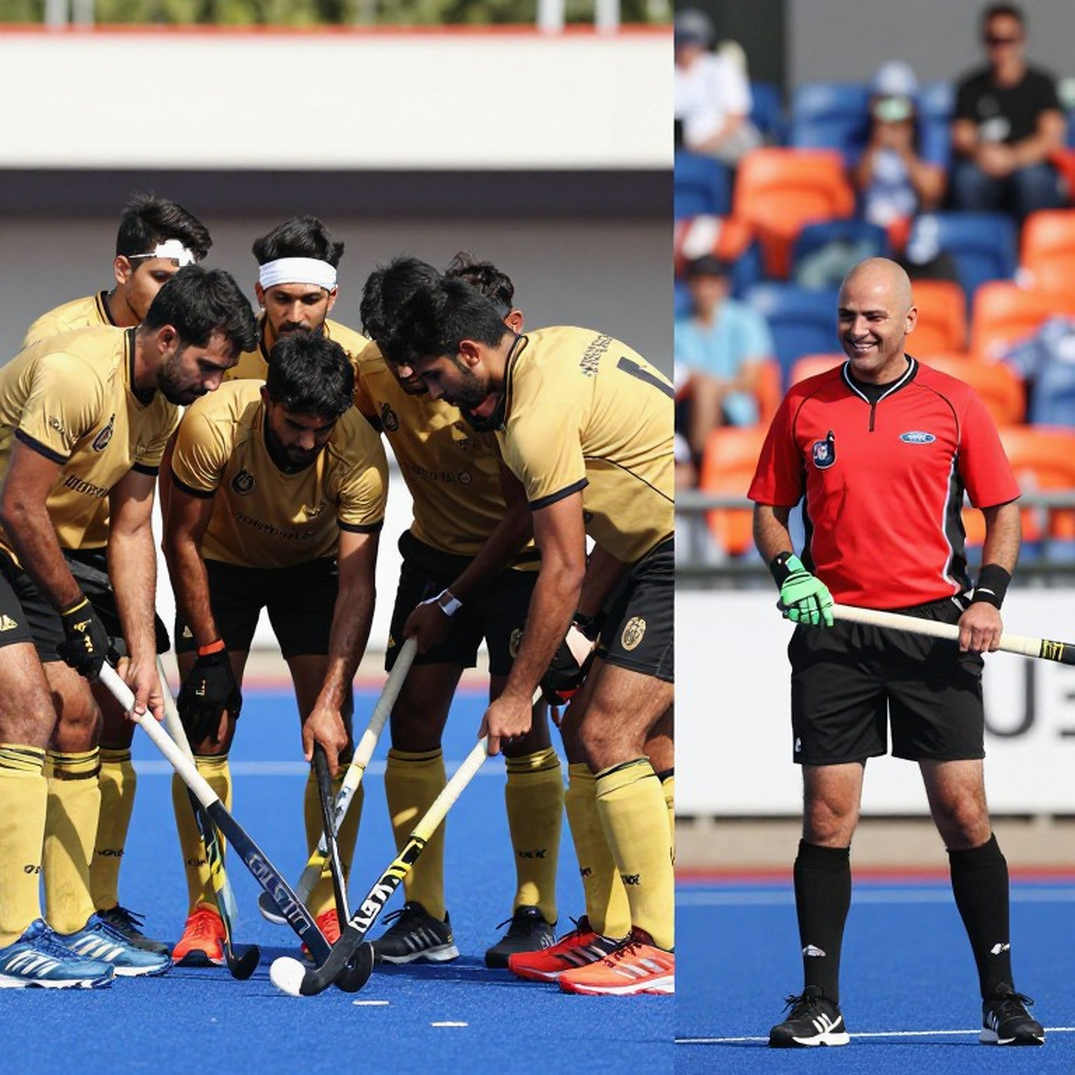
India are the defending champions and the Asian Games champions. Bangladesh's opening match is therefore not an opening ceremony. It is the first measurement of the tournament's spread. It is also the only night slot Bangladesh get — the only evening when the stands are full, the drums are out, and every touch carries the weight of noise.
Now open Bangladesh's ledger. The first entry is not presence but absence. The men's team has never played Olympic hockey. It has never qualified for a senior World Cup. The domestic Premier League has produced 13 editions in 27 years, and from 2026 to 2026 there was no competition at all — three straight years of an empty calendar. In a country of 170 million, the one functional venue is essentially Maulana Bhasani Hockey Stadium. I drew the grid before I knew what I was looking for. The grid of absences says the decline is schedule arithmetic and administrative neglect, not a shortage of players.
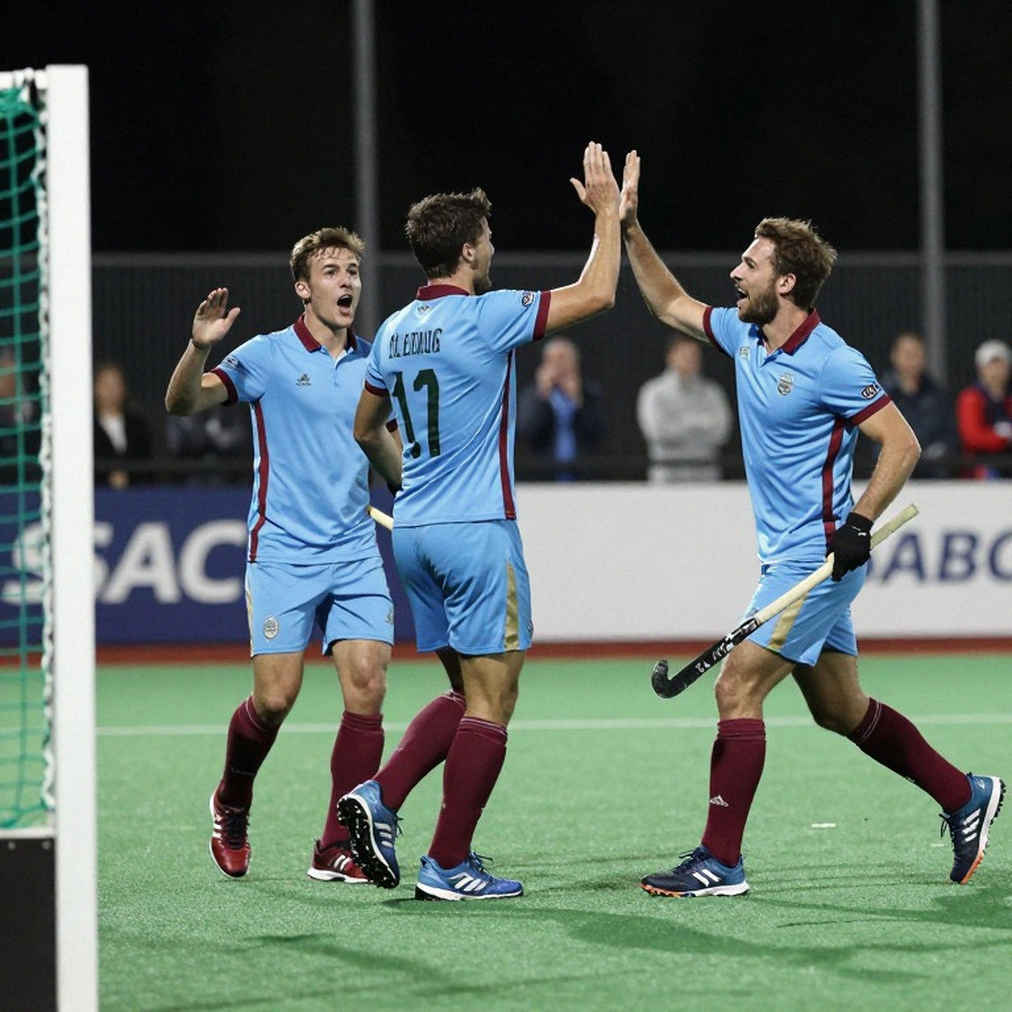
The other side of the ledger reads differently. Bangladesh won the Junior AHF Cup in 2026, 2026 and 2026, and in December 2026 qualified for the Junior World Cup for the first time. The 2026 franchise HCT proved that sponsors will fund hockey when it is packaged like cricket. Last November's playoff put hockey on front pages for an evening. Put both columns in the same book and an uncomfortable question surfaces: why did it take until 2026, and why has one televised league not become a calendar?
The schedule itself is the tactical fact. Five matches in seven days, arranged as two back-to-back pairs — 29 and 30 October, then 1 and 2 November. The only rest days are 28 and 31 October. Twice, Bangladesh must play on consecutive days, and each time the second opponent is no softer than the first: Japan then Malaysia, South Korea then China. In that arrangement the coach's only controllable variable is rotation, and rotation is measured in minutes.
The second variable is heat. Four matches tip off at 3:30 or 5:15 pm, in the warmth and humidity Punjab still holds in late October and early November. Afternoon hockey is heat management — slot changes, short shifts, energy saved for the third quarter. The team that runs hardest in Q3 breaks in Q4. Bangladesh's tradition is to sit deep, counter, and trust penalty corners, and for that kind of team the fourth quarter is the largest risk of all.
The third variable is goal difference. In a five-match league, fourth and fifth are often separated not by points but by goals. A heavy defeat to India means a four- or five-goal deficit that must later be repaid against Japan and Malaysia. So the target in match one is not how many goals Bangladesh scores; it is how few it concedes. That is the honest tactical discipline of a lower-ranked side in this format.
Take the opponents one by one. India's structure is familiar: a high press triggered the moment the ball is lost, a coordinated shadow from the forward line, and vertical passes on recovery. The most uncomfortable part for Bangladesh is India's penalty corner. Harmanpreet Singh's drag-flick is among the sharpest weapons in Asia, and India's conversion climbs when corners come. Bangladesh's first defensive job is to concede no corners — avoid fouls inside the circle, avoid carrying the ball into their own D, and shut the left outlet channel.
Bangladesh's deepest structural weakness is outletting from the 23-metre line. Against a high press, the patience and the options to play out both shrink; the result is the long ball, which returns before it reaches the forwards and puts the defence back to work. Against India the problem intensifies, because India's forwards shadow the instant they lose the ball. Keeping the first ten minutes goalless matters here not only psychologically but mathematically: the later the first goal arrives, the more energy and belief survive for the remaining four matches.
Japan deserve separate treatment, because they are the most structurally disciplined side in this field. Their passing patterns make few errors, their transitions are quick, and their corner routines are habit rather than improvisation. The 29 October match comes after a rest day, but the physical cost of the India game will not have cleared. The trap against Japan is matching their tempo — stepping into an open game. Bangladesh's advantage is that Japan also like to circulate the ball patiently, and against that patience a deep block can sit and hunt the counter.
30 October against Malaysia is the cruellest part of the schedule: the second day of a back-to-back and a third match in three days. Malaysia are physical, direct and strong on the corner battery; they build from long balls and second balls, which is poison for tired legs. This is the first real test of Bangladesh's rotation plan — who rests, who plays both days, and at what minute the slots change.
After one rest day, South Korea on 1 November. Korea traditionally play a 3-4-3, break central channels with quick vertical passes, and carry a long drag-flick tradition. The question for Bangladesh is whether the rest day produced real recovery. A side that has played four matches in five days is not fully fresh even after a break — especially when it must play again the next day.
Then China on 2 November, the fifth and final league match. For both teams it is a fifth match in seven days, so nobody is rested. China are physical, organised in a defensive block, and patient in possession. This match may do the most to settle fifth and sixth, because games like this tend to produce goals at both ends — tired teams make defensive errors, and tired teams take attacking risks.
Let me draw Bangladesh's own picture. The shape is a deep block: bodies behind the ball, the left side screened, and a quick reverse when possession is won. The three reliable attacking sources are corners, runs down the left, and long distribution from the goalkeeper. The model works when the team avoids conceding first and can accumulate corners.
The trouble begins when the block breaks. Plan B — holding possession, playing through lines, building triangles in midfield — is rarely visible in Bangladesh's game. So conceding first tends to shift the structure, and the rate of goals conceded in the fourth quarter rises. The cause is not fitness alone; it is the absence of an alternative structure.
Which brings us to the substitution clock. The substitution clock was never about time; it was about nerve. Watching Croatia go to extra time in three consecutive knockout matches at Russia 2026, I logged every substitution with its minute and the score state — when a coach blinks, and what shape the change produces. The lesson was single: the minute of a coach's first change and the score state that triggers it measure a team's courage. Across 29, 30 October and 1, 2 November, the minute of Bangladesh's first change is what I will watch most closely — more than the scoreboard.
Then comes the line. The line about men. The first Junior World Cup qualification in December 2026, the Junior AHF Cup titles of 2026 and 2026 — these are genuinely new and genuinely encouraging. But I keep drawing the same line at 21 and asking where those boys stand three years later. How many of that junior cohort are in this Asian Champions Trophy squad, and how many domestic minutes do they have? Without a domestic calendar, the junior-to-senior transition happens on a gala stage, not in a process.
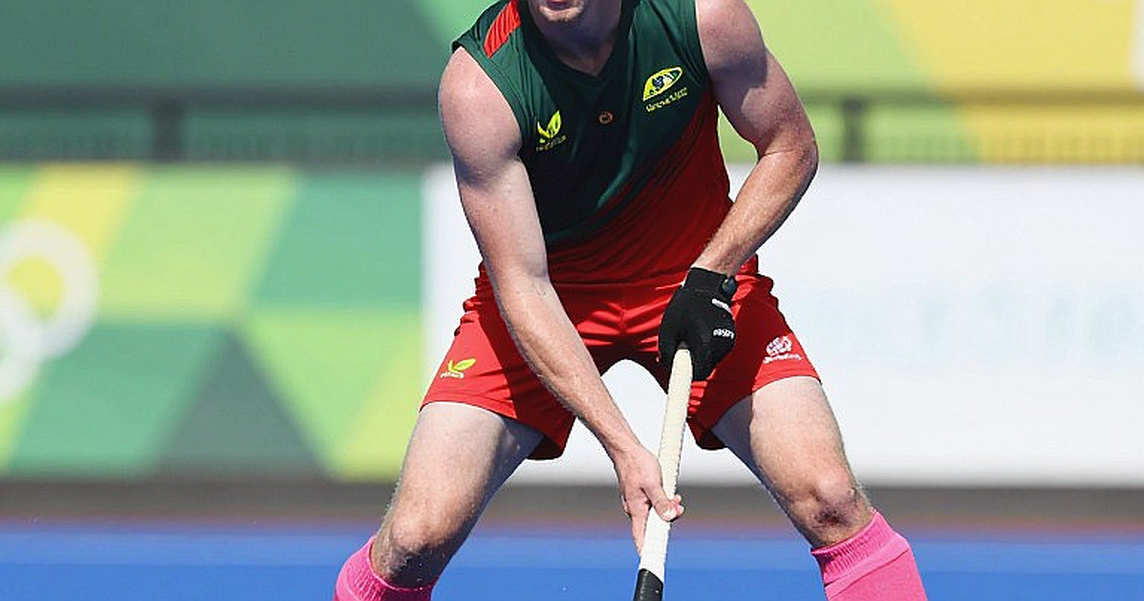
This is where the trap of reading junior trophies as senior momentum shows itself. A Junior AHF Cup title is not proof of senior progress; it is proof that the reservoir exists. The line is drawn at 21, and then the accounting starts — the senior team's stagnation is the leak in the pipeline, not the absence of water. This tournament is the junior cohort's first real audit, not its celebration.
One part of the format slips past the eye: the fifth-sixth playoff. On 4 November, the same day as the semi-finals, the bottom two play each other. On paper it is a consolation prize; tactically it is a sedative. A team that calculates towards fifth or sixth lowers its risk-taking, because the playoff berth is guaranteed while a semi-final place is not. The danger for Bangladesh is exactly that mood: the assurance of an extra match breeds the temptation not to gamble for wins.
There is another piece of arithmetic: the semi-final seeding. First plays fourth, second plays third. Leading the table is not a large reward, because the fourth-placed side also advances. That can tempt the bigger teams into calculating across the last two league matches — rotation, rest, thoughts about the semi-final opponent. For the smaller side, that gap is the opportunity, because a calculating team is never fully intense.
So what is a realistic target? In my notebook it is not a specific result. It sits in three layers. First, concede few corners and keep the opening ten minutes of every match goalless — hold the structure. Second, be a genuine contender for points against Japan and China, the two fixtures where the table is most likely to move. Third, stand up in the fourth quarter on the second day of both back-to-backs, because nobody remembers the margin at the end of a tournament; they remember who broke in the last ten minutes.
Now the counter-intuitive turn. The story everyone will write is that Pakistan left and Bangladesh arrived — one side's loss, another's gain. The truth is less dramatic. The sixth berth in this tournament is never decided by ranking; it is the product of an administrative decision. Bangladesh's participation is therefore not an achievement but an inheritance. There is no need to belittle an inheritance — but treating it as an achievement hides the real question: will this berth exist next time, and who will decide?
The second counter-intuitive observation: success here is not measured by results. Looking at five matches, people will say two wins is good and one is acceptable. In my ledger, the tournament's true value is the pipeline audit — whether the boys past the line at 21 can hold senior tempo, whether they are learning to outlet against a high press, and whether they break in the fourth quarter under back-to-back load.
The third: spikes versus calendars. The 2026 HCT league put hockey on front pages; last November's playoff did the same for an evening. Every spike feels like a turning point, and that is precisely the trap. The measurement should be calendar regularity — 13 editions in 27 years, nothing from 2026 to 2026, and no full calendar created even after 2026. A single televised event must beat that baseline to matter.
I am not borrowing the India hockey narrative here. From a desk in Delhi I watch that mature ecosystem daily — a professional league, Olympic medals, a real Pro League presence. Bangladesh's ledger runs the other way. Bangladesh has never played Olympic hockey, never qualified for the senior World Cup, and had no professional league before 2026. The comparison here is the contrast, not the template. And the question that rises from that contrast is structural, not diplomatic: if a team takes the field only because another team did not travel, who will build its own calendar?
Three things stay underlined in my notebook for this Asian Champions Trophy. The substitution clock — the minute of the first change and its score state, especially on 30 October against Malaysia and 2 November against China. The 70th-minute data — who is on the pitch in the fourth quarter, who can still run, who is merely standing. And whether that playoff on 4 November becomes a nuisance or a rehearsal for Bangladesh.
Because the table after five matches is only a summary of one week's results. The question that lands on the desk after the return from Punjab is much larger — whether the sixth berth still carries Bangladesh's name in the next edition, or whether it becomes another empty column in a 27-year book of 13 editions. The scoreline on 5 November will not answer it. The domestic calendar will, and that calendar is still unwritten.